

Japan wholesale womens clothing manufacturer partnerships in 2026 look nothing like they did five years ago. Rakuten sellers, Zozotown vendors, and MUJI-style select shops in Tokyo, Osaka, and Kyoto no longer want 500-piece minimums, generic sizing, or shipping timelines that miss the seasonal window. They want a japan wholesale womens clothing manufacturer that respects JIS sizing standards, holds OEKO-TEX Standard 100 certification, produces at MOQ 30-50 per style, and delivers on-time via Osaka or Narita air freight.
A&J International Apparel has served the Japan market since 2019, shipping over 180,000 units to 47 Japanese buyers across boutique retail, e-commerce marketplaces, and select shops. This guide is the operational playbook we hand to every new Japan account — what to expect from a serious japan wholesale womens clothing manufacturer in 2026, and how to filter out the 90% of factories that cannot deliver on the details Japanese buyers care about most.
Why the Japan Market Demands a Different Wholesale Womens Clothing Manufacturer
Japanese retail runs on precision. A Rakuten seller who receives a size 9 blouse with a 2cm bust deviation from JIS spec will return the entire shipment and leave a negative supplier review that costs future contracts. A MUJI-style select shop that receives beige linen with a 3-point Delta E color deviation from the approved swatch will reject the delivery on the loading dock. This is the reality of serving Japan — and it is why most japan wholesale womens clothing manufacturer claims collapse under real order pressure.
The three non-negotiables Japanese buyers ask about in every RFQ:
- JIS sizing certification — not “we can do Japanese sizes,” but documented JIS L 4001 grading with size 5/7/9/11/13/15 charts on file
- OEKO-TEX Standard 100 Annex 6 — Japanese consumers scan hangtag QR codes, and unregistered OEKO-TEX numbers get flagged within 48 hours
- MOQ 30-50 per style — Japan boutiques test 3-4 SKUs per season at low volume before scaling; a factory requiring 300 MOQ loses the account before sampling

What Separates a Trusted Japan Wholesale Womens Clothing Manufacturer From the Rest
At A&J, our Japan production line runs on a different SOP than our US or EU lines. The japan wholesale womens clothing manufacturer protocol we follow was co-developed with a Tokyo-based sourcing consultant in 2021 and refined across 130+ orders since. Five operational differences make the Japan line distinct:
- 12 stitches per inch on all main seams (vs 10 SPI for US market) — this is the visible density Japanese QC inspectors check first
- Bar-tacks at all stress points — pocket corners, belt loops, sleeve gussets — mandatory even on low-cost styles
- Selvedge or bound seams for all raw edges — no overlock-only construction; Japanese consumers turn garments inside out at fitting rooms
- Pre-shrink test on every fabric batch — 3% shrinkage max after 3 home washes, documented per batch
- Color matching to CIE Lab Delta E ≤ 1.5 — vs Delta E ≤ 3.0 industry standard; requires calibrated D65 lightbox at inspection
These are not premium upgrades. These are the baseline expectations of any credible japan wholesale womens clothing manufacturer serving MUJI-style select shops, Beams, United Arrows sub-brands, and Rakuten Fashion vendors.
JIS Sizing: The First Filter Every Japan Wholesale Womens Clothing Manufacturer Must Pass

Japanese womens sizing follows JIS L 4001, standardized by the Japanese Industrial Standards Committee. A japan wholesale womens clothing manufacturer that offers only US S/M/L sizing will not clear the first RFQ round. The full JIS chart A&J uses:
| JIS Size | Bust (cm) | Waist (cm) | Hip (cm) | US Equivalent |
|---|---|---|---|---|
| 5 | 76-80 | 58-62 | 82-86 | XS |
| 7 | 80-84 | 62-66 | 86-90 | S |
| 9 | 84-88 | 66-70 | 90-94 | M (Japan standard) |
| 11 | 88-92 | 70-74 | 94-98 | L |
| 13 | 92-96 | 74-78 | 98-102 | XL |
| 15 | 96-100 | 78-82 | 102-106 | XXL |
Note: JIS size 9 is the Japan standard sample size (equivalent to US M but ~4cm smaller on bust). Any japan wholesale womens clothing manufacturer that grades from US M as a base will produce oversized samples that fail approval.
MOQ Reality: Why 30-50 Is the Japan Sweet Spot
Japan boutique retail operates on tight inventory turnover. A MUJI-style select shop typically stocks 8-12 SKUs per category per season and reorders every 45 days based on sell-through. A japan wholesale womens clothing manufacturer demanding 300-piece minimums forces the buyer to hold 6 months of inventory — which no boutique will do.
A&J’s Japan MOQ policy:
- First-time samples: 3 pcs per size per color (18 pcs for size 7-13 x 1 color)
- First production order: MOQ 30 pcs per style (mixed sizes and colors permitted)
- Reorder MOQ: 20 pcs per style (after first successful order)
- Fabric surcharge waived if annual order commitment ≥ 500 pcs total
This structure lets Japanese buyers test 6-8 styles at $900-1,500 total sample investment, then scale winners into 200-500 pcs quarterly reorders. It is the only MOQ structure that fits how Japan boutique retail actually operates.
OEKO-TEX Standard 100 Annex 6: The Certification Japan Requires
Japanese consumers scan hangtag QR codes. This is not a marketing claim — the METI (Ministry of Economy, Trade and Industry) Consumer Affairs division tracks OEKO-TEX registration numbers, and any unregistered claim flagged by a consumer complaint triggers a supplier investigation within 30 days.
A japan wholesale womens clothing manufacturer serving the Japan market must hold OEKO-TEX Standard 100 certification under Annex 6 (Product Class II — direct skin contact) for all woven and knit fabrics used. A&J holds Annex 6 certification through TESTEX Zurich (certificate reference verifiable at oeko-tex.com label check portal).
The specific test parameters Japan customers verify:
- Formaldehyde ≤ 75 mg/kg (vs global Standard 100 ≤ 300 mg/kg)
- pH value 4.0-7.5 (skin-neutral range)
- Azo dye AZO-free (banned amines list per METI Chemical Substances Control Law)
- Nickel release ≤ 0.5 μg/cm²/week (for metal trims — buttons, zippers, snaps)
5-Country Wholesale Womens Clothing Market Comparison

A&J now serves 6 wholesale womens clothing manufacturer markets globally. Japan differs from US/UK/AU/CA/DE in three ways that matter for supplier selection:
| Market | MOQ | Lead Time | Certification Focus | Sample Cost |
|---|---|---|---|---|
| USA | 50 | 35 days | Berry-Compliant, CPSIA | $150-200 |
| UK | 50 | 40 days | UKCA, REACH | $180-220 |
| Australia | 50 | 45 days | AS/NZS, Wool Mark | $180-220 |
| Canada | 50 | 40 days | CSA, Health Canada | $150-200 |
| Germany | 50 | 45 days | GS Mark, TÜV, EN 71 | $200-250 |
| Japan | 30 | 40 days | OEKO-TEX Annex 6, JIS L 4001 | $180-250 |
Japan’s lower MOQ + JIS sizing + Annex 6 certification combination is unique. A japan wholesale womens clothing manufacturer that treats Japan as “another Asian market with slight differences” will lose accounts within one order cycle.
Fabric and Aesthetic: What Japan Boutiques Actually Order
Japan womens wholesale skews toward specific fabric-color-silhouette combinations that reflect MUJI/UNIQLO/COMME des GARÇONS design DNA. In the last 24 months, A&J’s top 10 Japan-market SKUs share these characteristics:
- Fabric: 100% linen (280-320 GSM), organic cotton twill (240 GSM), Tencel Lyocell blends
- Color palette: Ecru/off-white, taupe, sage green, indigo, charcoal, natural black
- Silhouette: Oversized boxy fits, drop shoulders, wide-leg cropped pants, tunic tops
- Details: Minimal branding (main label only, no side seam prints), coconut/corozo buttons, French seams visible
A japan wholesale womens clothing manufacturer offering only fast-fashion silhouettes (bodycon, crop tops, athleisure) will not fit Japan’s boutique demand. The A&J Japan style catalog is a curated 240-SKU library aligned to this aesthetic.
Osaka & Narita Air Freight: The 5-7 Day Delivery Advantage

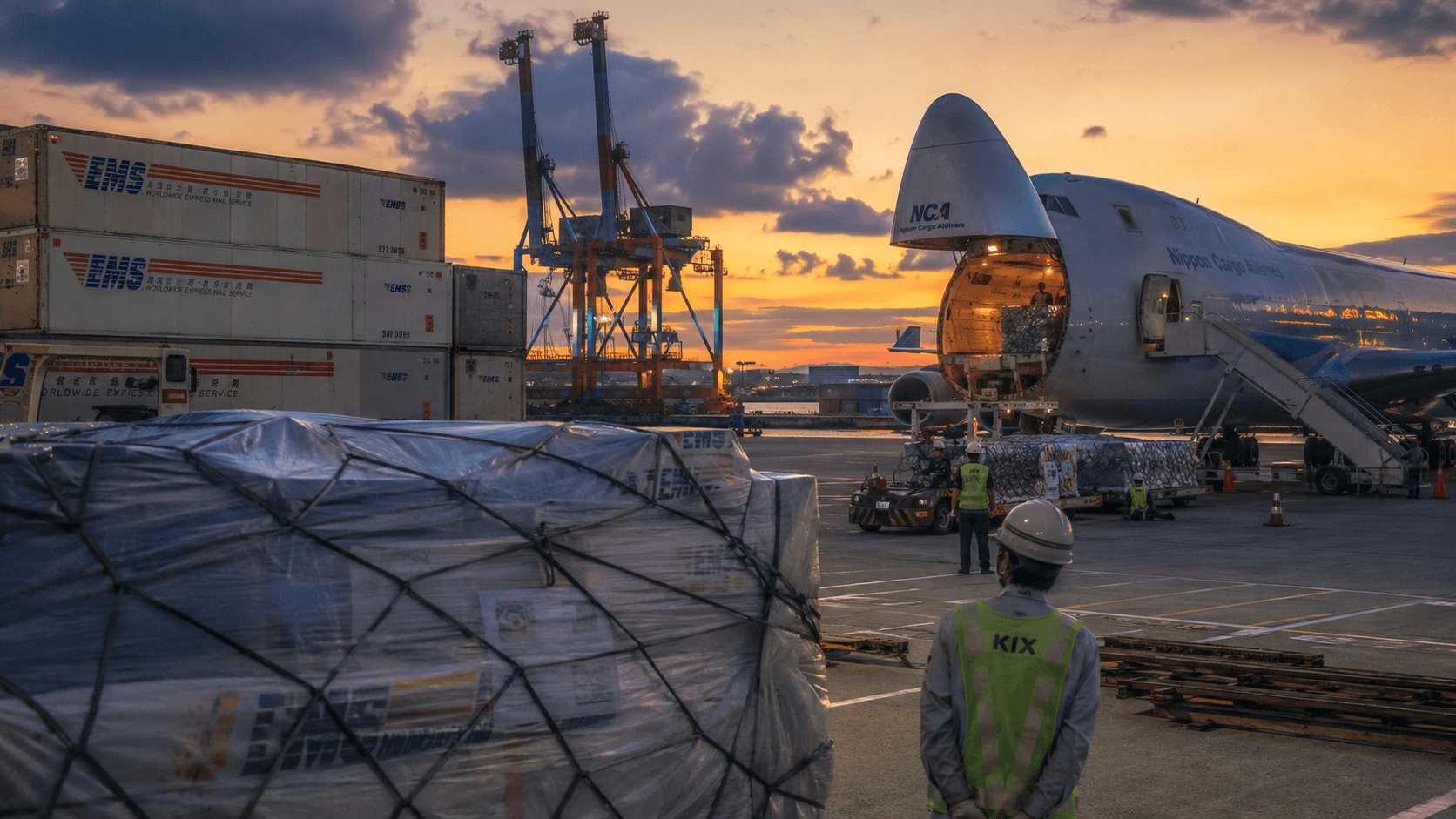
Japan-China proximity is a logistics advantage most Southeast Asian japan wholesale womens clothing manufacturer competitors cannot match. A&J’s Guangzhou factory ships to Japan via three routes:
- Air freight (EMS): 5-7 days, $8-12/kg, best for reorders and seasonal launches
- Sea freight (Guangzhou-Osaka): 10-14 days, $2.50-3.80/kg, best for FCL/LCL bulk
- Express (DHL/FedEx): 3-5 days, $12-18/kg, best for samples and small reorders
For a 200-pc reorder (~40 kg), air freight adds $320-480 total but arrives 7 days faster than sea — often the difference between hitting the seasonal launch and missing it entirely.
What to Ask a Japan Wholesale Womens Clothing Manufacturer Before Signing
The RFQ template A&J recommends Japanese buyers use with any prospective japan wholesale womens clothing manufacturer:
- Can you provide a current OEKO-TEX Standard 100 Annex 6 certificate number?
- What is your standard MOQ per style, and what discount applies at 100/300/500 pcs?
- Do you grade from JIS size 9 as your base sample size?
- What is your Delta E color matching tolerance? (Should answer ≤ 1.5)
- What is your defect rate on last 10 orders shipped to Japan? (AQL 1.5 minimum)
- Do you offer selvedge or bound seams as standard on all raw edges?
- What is your lead time for reorders under 100 pcs? (Should be ≤ 30 days)
If any answer is vague, hedged, or missing documentation, move to the next candidate.
FAQ: Japan Wholesale Womens Clothing Manufacturer Questions
Q1: What is the minimum order quantity for a japan wholesale womens clothing manufacturer partnership with A&J?
A: 30 pcs per style for first orders, 20 pcs per style for reorders. Mixed sizes and colors within a style are permitted. This is 5-10x lower than most Chinese factories serving global markets.
Q2: How long does production take for a japan wholesale womens clothing manufacturer order at A&J?
A: 40 days standard from fabric confirmation to ex-factory. Rush production (25-30 days) available at 15% surcharge, subject to line capacity.
Q3: Does A&J as a japan wholesale womens clothing manufacturer support JIS sizing standards?
A: Yes. We grade from JIS size 9 as the base sample size, produce full JIS 5-15 range, and file all size charts per JIS L 4001 specification. US S/M/L conversion is provided on request but not our default.
Q4: What certifications should a japan wholesale womens clothing manufacturer hold in 2026?
A: OEKO-TEX Standard 100 Annex 6 (mandatory for skin contact), BSCI or Sedex SMETA (for social compliance audits), and ISO 9001 (for quality management). A&J holds all three plus GOTS for organic cotton production.
Q5: Can a japan wholesale womens clothing manufacturer produce MUJI-style minimal aesthetic pieces?
A: A&J’s Japan catalog is curated to the MUJI/UNIQLO/COMME des GARÇONS aesthetic — natural fibers, muted palettes, oversized silhouettes, minimal branding. Custom design in this aesthetic is supported with 15-day sample turnaround.
Ready to Partner With a Trusted Japan Wholesale Womens Clothing Manufacturer?
A&J International Apparel is accepting new Japan market accounts for AW26 and SS27 production windows. Visit our contact page to submit an RFQ with your target styles, sizing requirements, and quantities. Sample turnaround from RFQ to physical sample is 15-20 days for stock silhouettes, 25-30 days for full custom development.
For related market intelligence, explore our other regional wholesale guides:
- USA Wholesale Womens Clothing Manufacturer 2026
- UK Wholesale Womens Clothing Manufacturer 2026
- Australia Wholesale Womens Clothing Manufacturer 2026
- Canada Wholesale Womens Clothing Manufacturer 2026
- Germany Wholesale Womens Clothing Manufacturer 2026
- OEKO-TEX Certified Womens Clothing Manufacturer 2026


Leave a Reply